Open two browser tabs and search the same stretch of Northwest Hills on two different listing platforms. One tells you the neighborhood's median sale price landed in the $700,000s last month. The other, pulling from what looks like an almost identical map, shows a three-month rolling median well above $1.2 million for a nearly overlapping window. Neither site made an error. They counted different houses.
If you're comparing Northwest Hills to other Austin neighborhoods before you've toured a single property, this is the first thing worth understanding: there is no single Northwest Hills price. There are at least three markets sharing one name, and the number you land on depends on which one your source happened to sample.
Same Boundary Roads, Three Different Neighborhoods
Most locals draw Northwest Hills the same way: MoPac (Loop 1) to the east, Loop 360 to the west, RM 2222 to the south, and Spicewood Springs Road to the north. The Barrow family began assembling ranch land inside those boundaries in the 1950s, and David Barrow Sr. later helped push for the construction of MoPac itself. The Barrows platted the interior in phases and reportedly avoided selling too many adjacent lots to a single builder, which is part of why the housing stock inside those four roads never settled into one type.
Drive through it today and you'll pass three distinct products wearing the same neighborhood name:
- The Far West corridor near MoPac. Condos, townhomes, and apartments built for proximity over yard space, priced closer to a renter-to-owner transition than a family move-up.
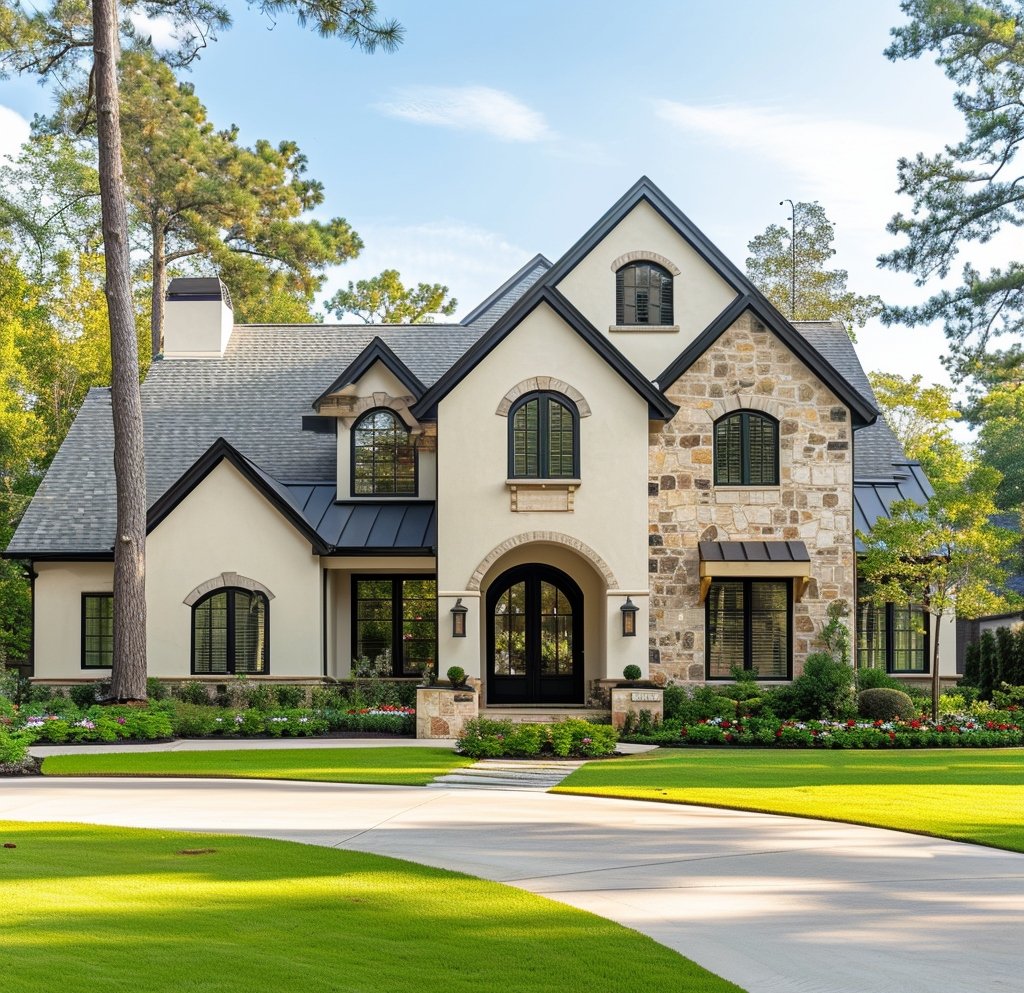
- The interior streets feeding Doss Elementary, Murchison Middle, and Anderson High. Original ranch and traditional homes from the late 1950s through the 1980s, most on quarter-acre-or-larger lots, ranging from untouched to fully rebuilt.
- Cat Mountain and Highland Park West. Canyon and hill-country view lots increasingly carrying new custom construction, where a torn-down 1960s ranch gives way to a home several times its original size.
A median calculated across all three tells a buyer almost nothing about what they'll actually pay for any one of them.
What a Slow Month Does to the Number
The mechanism isn't exotic once you see it. Across different 2026 reporting windows, Northwest Hills has closed somewhere between roughly a dozen and two dozen sales in a typical month. That's a small enough sample that a handful of unusual closings can drag the median a long way in either direction.
Picture a month where three canyon-lot custom builds close alongside the usual run of ranch-home resales. The median jumps. Picture the next month, when those same buyers are still under construction and the closings skew toward condo resales near MoPac. The median falls by hundreds of thousands of dollars, and nothing about the underlying neighborhood changed at all.
Layer a boundary disagreement on top of that sampling problem and you get a spread like this:
| Tracking approach | Reported window | Median sale price | Typical time to sell |
|---|---|---|---|
| Tight polygon, closed sales only | March 2026 | $758,000 | 62 days |
| Wider footprint including Far West condos | Quarter ending June 2026 | $1.2 million+ | 38 days |
Both rows describe real transactions. They're describing different neighborhoods that happen to share a mailing address.
The spread shows up inside single months, too. In that same March 2026 window, sold data for the area included a condo near $200,000 and a townhome around $400,000 alongside updated single-family homes clearing $1 million, all filed under the same neighborhood name. At the top end, a canyon-adjacent custom build on N Hills Drive closed near $3.5 million in late 2025, while a newly finished luxury build on Deepwoods Drive was still asking just under $3.4 million months later. Average those figures with the $200,000 condo and you get a number that describes none of them.
The Edge Is Still Under Construction, Literally
Part of why the boundary stays unsettled is that the northern edge, along Spicewood Springs Road, is under active construction. The city has been widening that stretch from two lanes to four, adding a median, turn bays, and shared-use paths, a project that broke ground in 2023 and has continued into 2026. New development has followed the road work: a proposed multi-family project called the Overlook at Spicewood Springs, a smaller single-family community from PSW Real Estate aimed at buyers priced out of a full teardown-and-rebuild, and a new Austin Board of Realtors headquarters building, all sitting along the same corridor.
Not everyone welcomes the pace. One longtime Northwest Hills resident, reacting to the scale of the new construction along that stretch, put it plainly:
"I was astounded how big and how imposing the building was."
That tension between the corridor's older, low-slung commercial buildings and the density arriving alongside the road project is exactly why a data provider drawing the northern boundary at Spicewood Springs today might draw it somewhere slightly different in eighteen months. The edge of this neighborhood is being built in real time.
What to Compare Instead of the Headline Number
None of this means Northwest Hills is impossible to evaluate. It means the headline median is the wrong tool for the job. A more useful comparison for anyone actually shopping the area:
- Price per square foot on your specific street, not the zip code. A 1970s ranch home competes against other 1970s ranch homes, not against a new build on Cat Mountain.
- Condition and system age, not just square footage. Most original housing stock here dates to the 1960s and 1970s, and recurring issues from that era, foundation movement tied to the area's shallow limestone and caliche soils, original cast-iron plumbing, and aging HVAC, show up in inspections regardless of how updated the kitchen looks.
- Actual closed comps on your sub-pocket, pulled within the last few months. Given how thin the monthly sales count runs, a comp from six months ago in a different sub-pocket tells you less than it would in a higher-volume neighborhood.
A move-up buyer comparing Northwest Hills to a newer suburb should ask which of the three sub-markets they're actually being shown, and price accordingly, rather than anchoring to whichever number came up first in a search.
A Few Questions Worth Asking Before You Compare Numbers
If I'm comparing Northwest Hills to another neighborhood, what number should I actually use? Skip the neighborhood-wide median and ask for closed comps on the specific streets you're considering, matched for condition and lot type. In a market this segmented, that's the only number that reflects what you'd actually pay.
Does a lower reported median mean the neighborhood is cooling? Not on its own. In a market this thin, a lower median in a given month often just means fewer high-end custom builds closed, not that values across the neighborhood declined.
Are all Northwest Hills homes the same age? No. Most of the original stock dates to the late 1950s through the 1980s, but the neighborhood also includes condo and townhome development near MoPac and a growing number of newer custom builds on view lots, particularly in Cat Mountain and Highland Park West.
Comparing neighborhoods on price alone was never going to tell the full story, and Northwest Hills makes that harder to ignore than most. If you're weighing this area against others in Central Austin and want the comparison done street by street instead of zip code by zip code, Roxanne Escobedo can walk through the actual comps for your specific sub-pocket and help you schedule a confidential consultation before you commit to a number you saw on a screen.